Time to say goodbye to Portugal. Having neglected to write the blog up any sooner (it is May 2018 at the time of writing!) I now don’t remember much about the journey out of Portugal to Spain. We went east along the coast road as far as possible then cut up to the motorway which leads to the bridge across the river into Spain. We hoped that the 10 euros we had put on the Tollcard had not run out. (Checking online weeks later we discovered we still had a balance of €1.21.) Once in Spain the trip was mostly through scrubby, but not unattractive, countryside on the toll free motorway – which is the only road that actually goes this way. Stella let us down as we approached the turn to the aire. It is a “Spanish” left turning off an urban dual carriageway which means to turn left you have to move into a distinctly dubious-looking third lane on the right and wait for a separate light to turn left across all the lanes of traffic. Stella picked the turn before the one we needed and stranded us in a builders yard with no way out other than driving all the way back to the last roundabout and trying again. This time we determinedly ignored Stella when she tried to pull the same trick – she does not learn! Fortunately, we do. Mostly.
There is a choice of three aires in Seville and I had selected the small one furthest out of town in the river marina at Puerto Gelves. It is a secure place to park with a regular bus to the centre of Seville. We had a lovely spot on the banks of the Guadalquivir.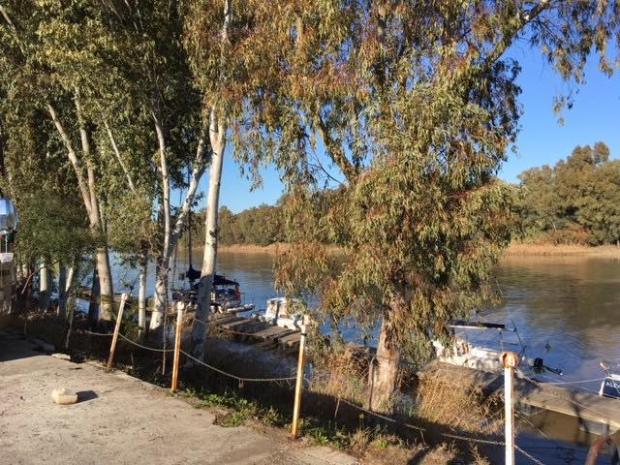 There were boats to watch coming and going and the marina had all the facilities to look after itinerant sailors and landlubbers alike – chandlery, low key restaurant, clean toilet and hot showers.
After wandering off site to check out the bus timetable and location of the bus stop to get into town on Saturday we spent a quiet afternoon footling around the marina in the sun.
The bus came on time and for a couple of euros delivered us close to the centre of Seville. I had chosen two things to go and see if time permitted, the Cathedral and the Alcazar. Before that though we needed to acquire a local sim card for the wifi. We took passports, birth certificates, inside leg measurements etc as we knew from last year they did not part willingly with sim cards in Spain. Forty-five minutes wait in the Vodaphone shop and we were fully equipped to go! On the way to the phone shop we had seen the queue to get into the Cathedral – this is mid-February and yet the city is pretty full of tourists – and mostly not retired people like us. How does this happen? We withdrew into a narrow side road full of restaurants to eat before we queued. The platter of fried fish for two came with a jug of sangria and olives to start. A lovely meal of different types of fishy delights (which I forgot to photograph). 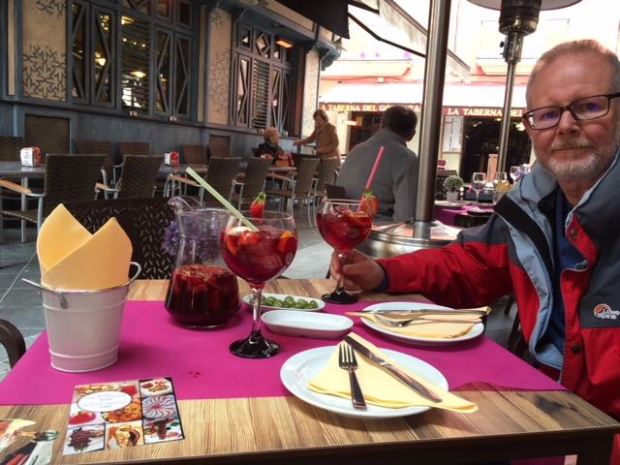
The queue for the cathedral moved quite fast – probably because it is immense and so can accommodate many people. It is so wide that until you get your bearings, it is difficult to recognise the traditional shape of a church. It was built on the site of a huge mosque and despite remodelling and rebuilding over the centuries some elements of it still remain. The courtyard with the merciful shade of many orange trees was part of the mosque and the magnificent bell tower actually incorporates the original minaret. 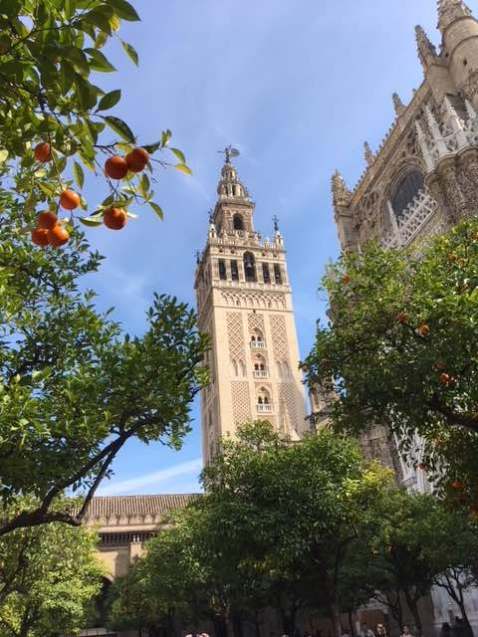 I cannot do justice to all the things to see in such a renowned historic building so these few photos will have to do. Other pictures are available all over the internet.


The tomb of Christopher Colombus may or may not contain his bones: he seems to have travelled about as much after his death as he did in his lifetime, crossing the Atlantic at least twice. DNA testing against the known bones of his brother in 2006 proved he definitely may be lying at peace here.
Seville had become even hotter while we wandered around the cathedral and loitered in the shade of the orange trees so we were in two minds about going on to tackle the Alcazar, the Royal Palace. My mother remembered it fondly from a trip many years ago so I wanted to see it if possible. We joined the queue with a view to ducking out if it moved too slowly. Persistence was definitely rewarded in this case! If you can only face one major historic building per city, the Alcazar is the one to choose in Seville. It has cool arcades with delicate moorish decoration and courtyard pools,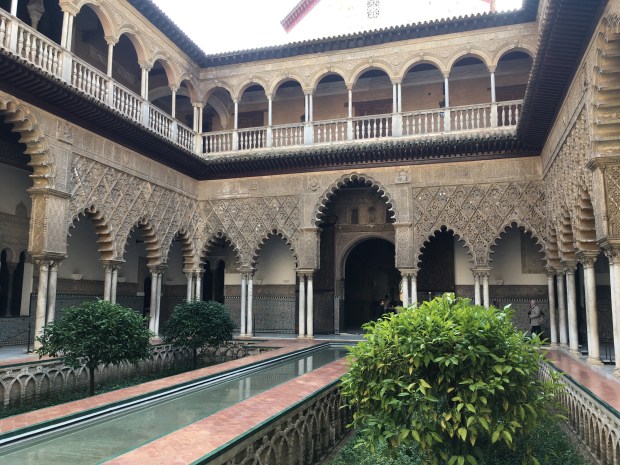
tiled walls where rooms adjoin other rooms and pass into corridors leading from one phase of the building to another.


Pass the semi-subterranean bath room of Lady María de Padilla …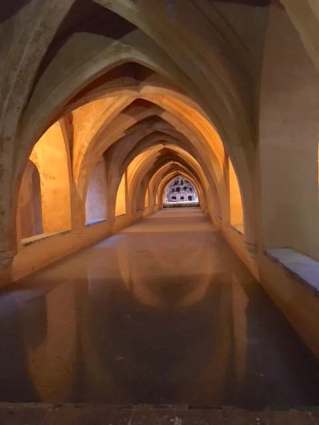
…to reach the elegant gardens and streams. Our pictures do not do the Alcazar justice….


We finished our tour with a cool drink in the garden cafe in the company of a regal peacock.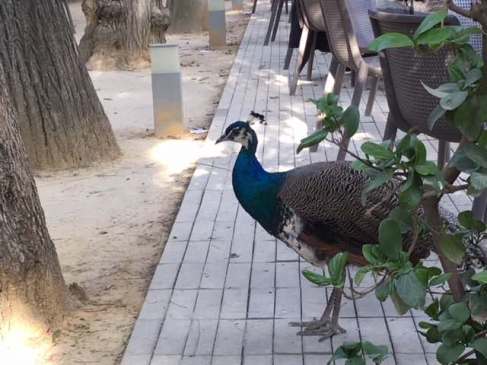 A gentle stroll under the trees on the avenue back to the bus stop took us past the third UNESCO Heritage Site in this quarter – the splendid Archivo General de Indias. This holds the records of the Spanish empire east and west and is apparently “an unusually serene and Italianate example of Spanish renaissance architecture”. (Thanks Wikipedia.) Pretty splendid too. There is much more to see so we may need to pass this way next year.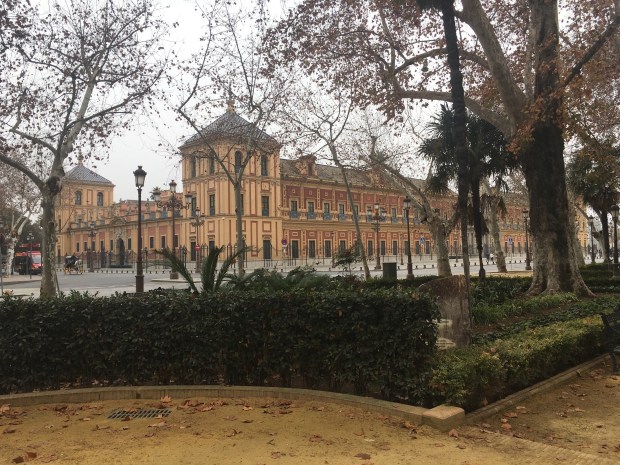
The bus came right on time and whisked us back to the relative cool of the riverside. Where a surprise awaited us – no sooner was the kettle on than there was a knock on the door. Louisa had arrived! She was on her way back to Portugal after a trip around the coast south and east of here and stayed for a cup of tea and catch up. Always great to see old friends for an exchange of news and to hear about good places to stay in the vicinity. Later we popped into hers for a gin as the sun went down – a nice way to end our Seville visit.
Tomorrow – a couple of hours south east for some even older history – bronze age burial mounds and dolmens in Antequera.
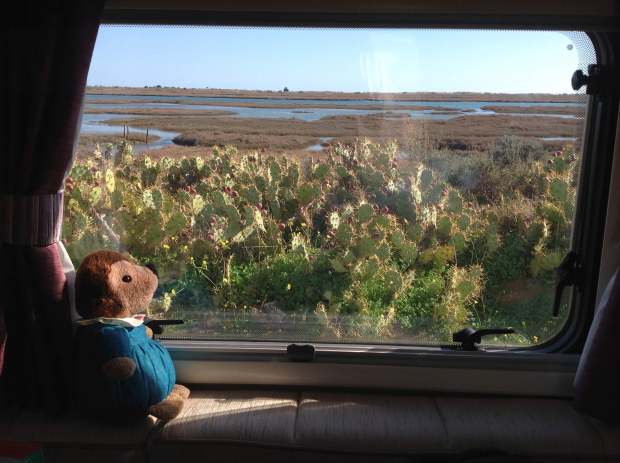 Rolling wistfully out of Mikki’s we topped up the LPG and took to the N125. Portia started first time despite having stood idle for four weeks! After a couple of hours we engaged in battle with the barrier across the entrance to the Pedras D’el Rei parking place – surprising how many different systems there are for something as simple as opening a barrier. Once in we get a lovely sea view spot – well – the sea is there beyond the estuary and the dune at the far side. Never seen such a profusion of cacti and prickly pears. They fought all attempts to pick and eat them: despite using cloths and tongs I got hair-fine prickles in my fingers. The beautiful beetroot-coloured juice they bled narrowly missed my white linen trousers – a small win against the vicissitudes of nature!
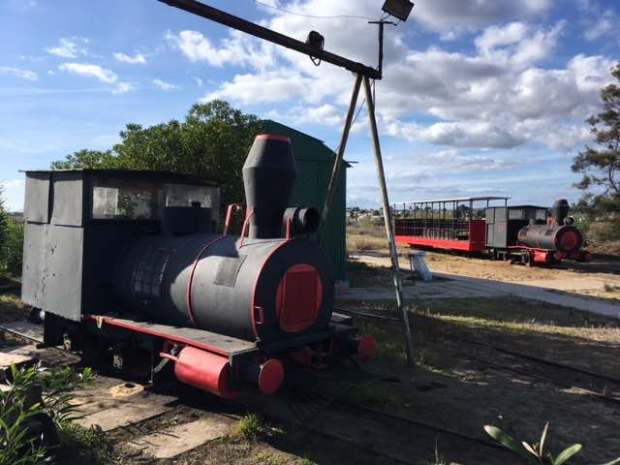 For exercise we chose to walk across through the trees and dune vegetation – a lovely walk with bird-spotting panels along the way.

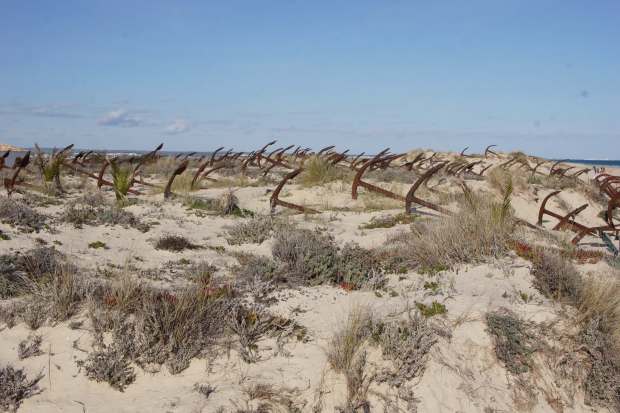 And then, as the sun sinks in the west, a sandy beach several hundred miles long…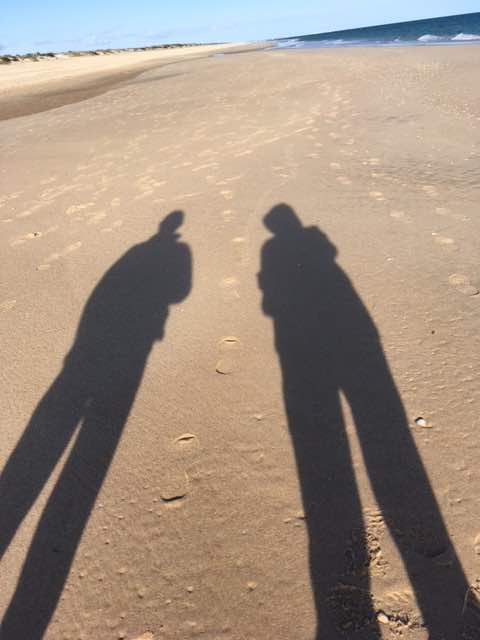
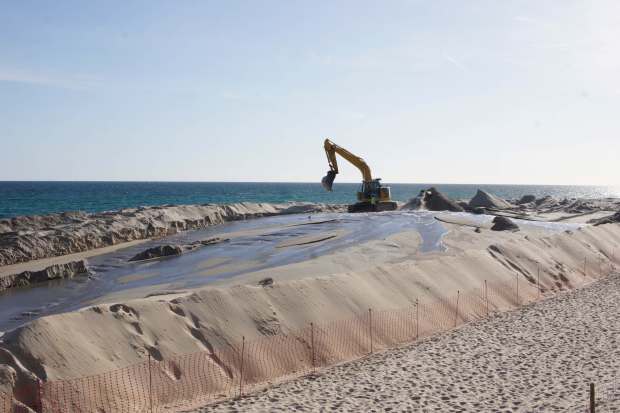 We have earned a cheese toasty a la Portugaise at the converted fishermens cottages
 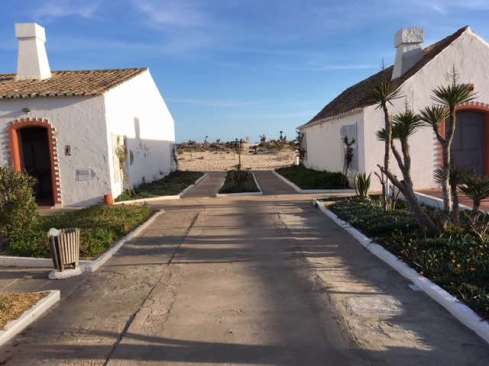 and are in time to catch the last return trip of the day back to reality. We get front row seats at the back of the train as it reverses all the way. What a great day out.
 This place is too good to leave after only one night. It has waste emptying facilities but no handy tap for water. For that you have to drive the couple of miles along the sea to Santa Luzia, find somewhere to buy a token,
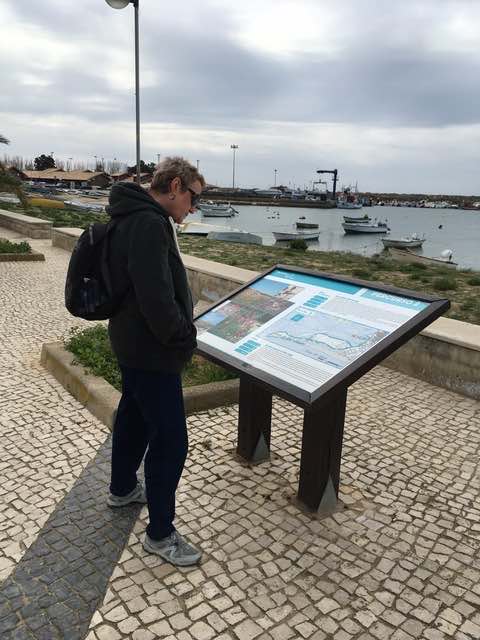
 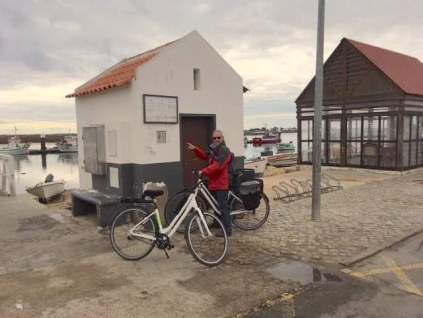 locate the modest shed-like building near the fishermens’ cottages and figure out how it works. Sorting this out is our first task when we set out for a bike ride next day. The Post Office (open) obliges with the token and eventually we find the tap. Triumph! Now just to come back tomorrow and fill the van. A mother and daughter on bikes had told us the little town of Tavira was only a short ride away and on very accessible cycle paths. Off we pedal – what a joy these bikes are. Tavira is a relatively quiet riverside town with Moorish roots followed by later Portuguese development – a charming mix beautifully placed beside the Gilão River. We look around a small church – its inside as ornate as its outside is plain.



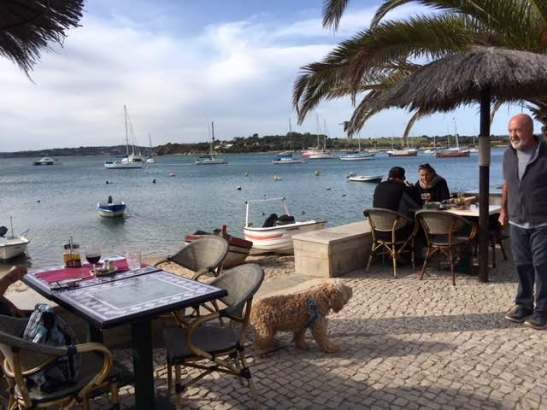
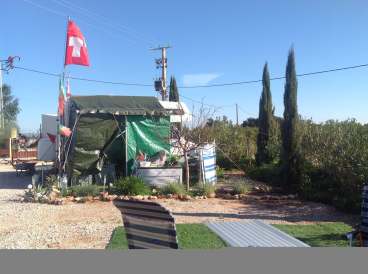 quirky, tranquil corner many degrees warmer than back home. We were at pitch number 3 and our Swiss neighbour at number 1 had been there on and off for years rather than months – he had developed quite a bunker. Luc at number 4 divided his year between home and Mikki’s. He explained all about the three restaurants in the village and how you could have the menu del dia for between six and nine euros including wine. He pedalled off everyday for lunch and had more or less given up cooking to save money. Prices for most things in Portugal are very good.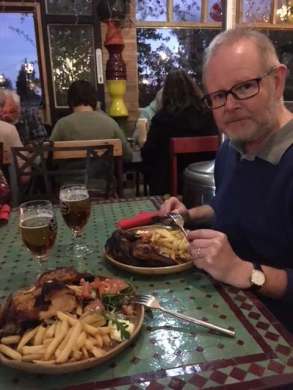
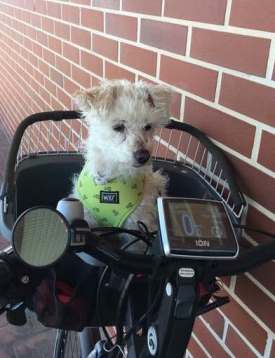
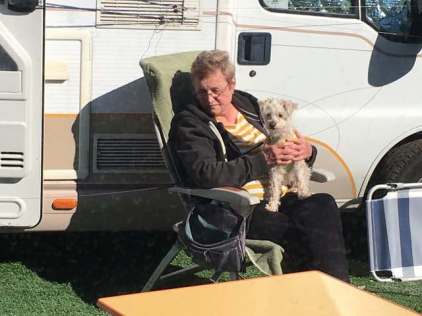 Our next neighbour was Hanneke who travels alone with her little rescue dog ZsaZsa and was in the market for another pooch as ZsaZsa was very old, rather deaf and rather blind:-( She was a sweet and undemanding little dog who did not like to be on her own, so I babysat once or twice. Hanneke cosseted her but was also pretty unsentimental – she had packed a shovel in the van in case the worst came to the worst while they were away:-(







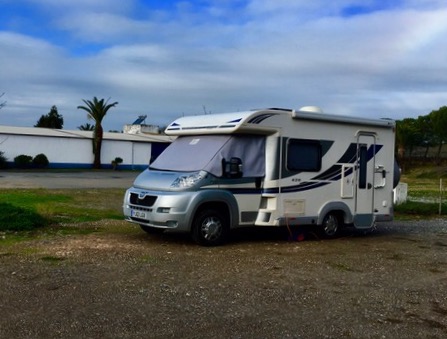 thermal screen for the windscreen and cab door windows which I don’t believe I have mentioned before. We bought it last January in icy weather at huge cost en route to Spain. Everything to do with motorhomes seems to come at an inflated price and only some of them are worth it. Even though we have blinds on the inside of all the windows this thermal screen is definitely worth it – its silvery surface keeps heat out in the summer, and cold and condensation out in the winter. It even has a drop-down front flap to open during the day and let light in. We have probably already saved a good part of the price in reduced gas heating costs.

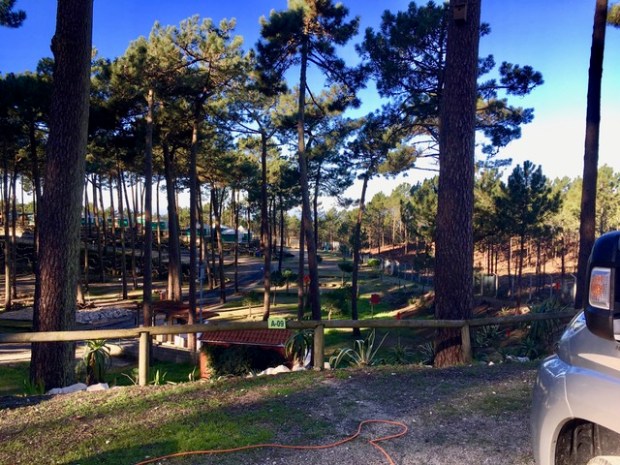 We are now only one more night away from the Algarve and the Moorish village of Messejana, three hours drive away, has a commercial aire. We want to take the motorway as, apart from speed to the sun, Neil is anxious to top-up the LPG, which has been taking some welly, and ensure we have the right kit for Portugal. We try three service stations and at none of them does our Portuguese adaptor fit the Portuguese pump. Oh bugger. Down-hearted that yet something else does not do what it is supposed to do we decide to leave it for another day and head for the aire.
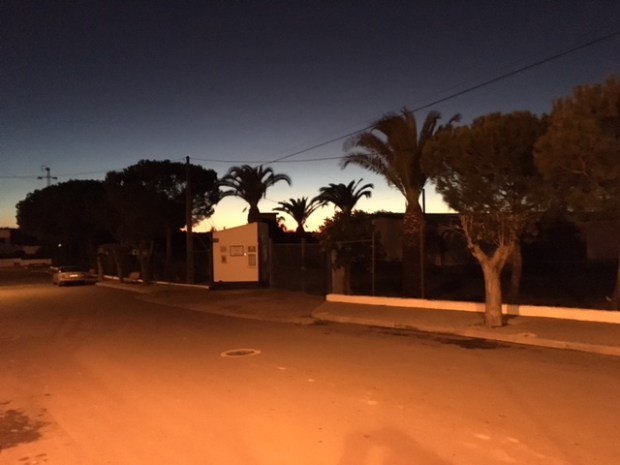 It looks deserted and the gate is locked:-( More despondency, so we decide just to park on the road outside until I spot a small notice on the shed by the gate. It gives a phone number. As I am ringing a man wanders over from the bar opposite and unlocks the gate for us. Then the manager turns up and cheerfully explains things – where to hook up, the wifi password (surprising), where the toilets are (several hundred yards away), and that we will be locked in at 9.30pm until 9.30am. Ah well – time for a quick beer in the tiny local bar opposite (smoking still allowed) before curfew.
  It’s dark by now anyway so we retreat to the van to investigate gas pump adaptors. Various on-line forums show that we should be using the same dish adaptor that we have used before in Greece and France and not the pointy Euro one that our documentation says we should use in Portugal. For goodness sake! We later discover that Spain appears to be the only country that uses the Euro adaptor – well, of those of which we have direct experience.

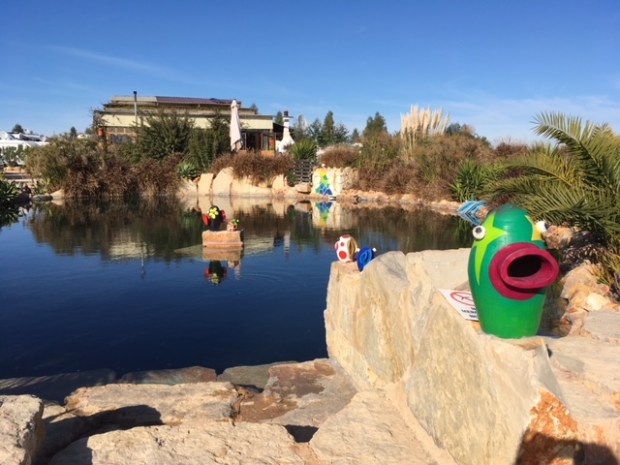
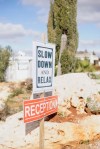 A sign near the gate says Slow down and Relax. Finally, what feels like a safe and sunny haven after all the problems and anxieties of the past several days. All The Aires describes Mikki’s as an aire run more like a commune by a Dutch potter. It is wonderful. Constructed on different levels there is a natural swimming pond at the bottom surrounded by bizarre pots and models.
  A huge barn-like structure supported by glazed flower pots doubles as reception, bar, restaurant, exhibition space, indoor garden and aviary.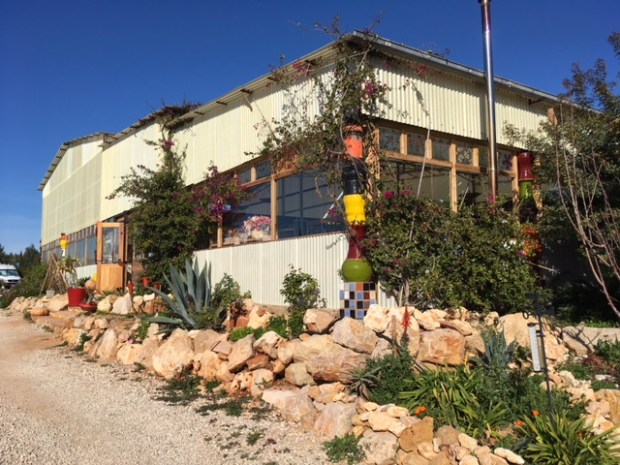


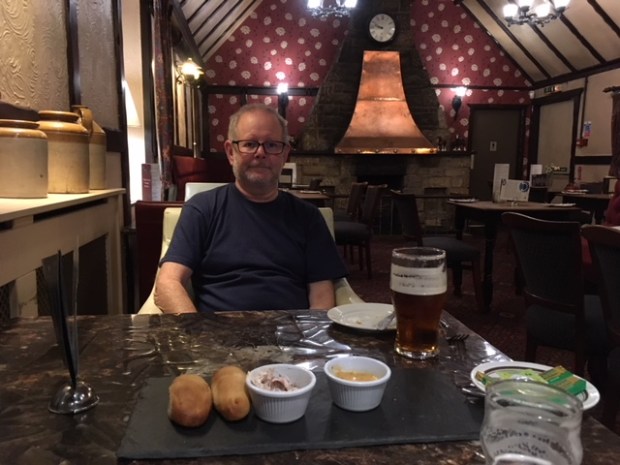
 Oxford which lets you stay overnight in exchange for eating there or £20.00. We had baked ham with bubble and squeak and pints of something with a rustic name.
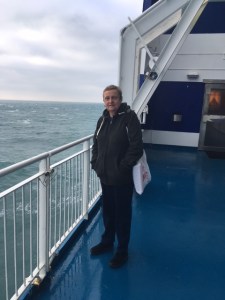 This picture shows not only the lovely calm weather but the extreme shortness of the haircut I had had in anticipation of three months in the van. Do I like it? No. Is it practical? Yes. Short hair is actually a real bonus on the road if your vanity can cope.


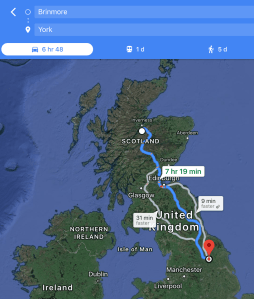






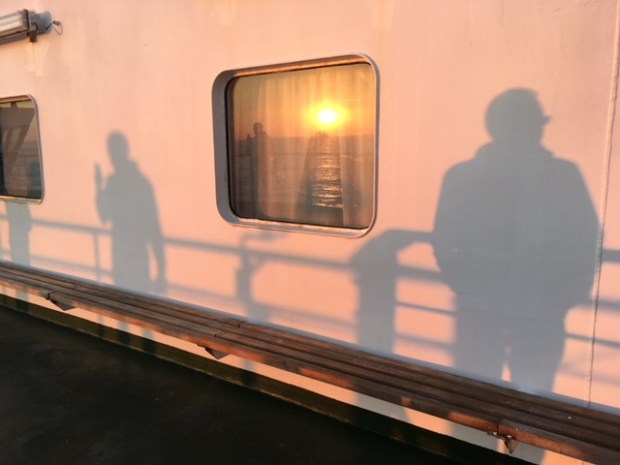
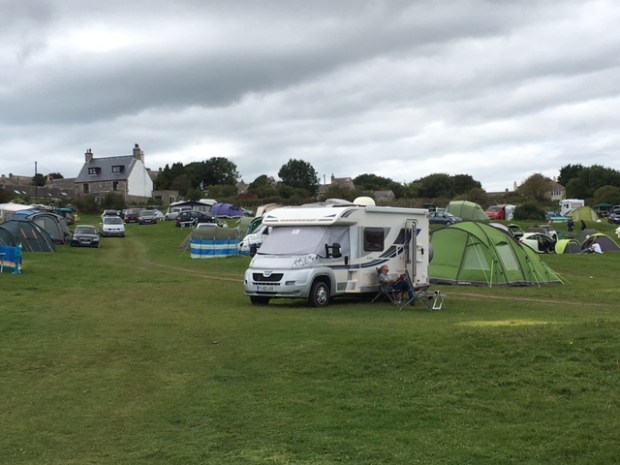
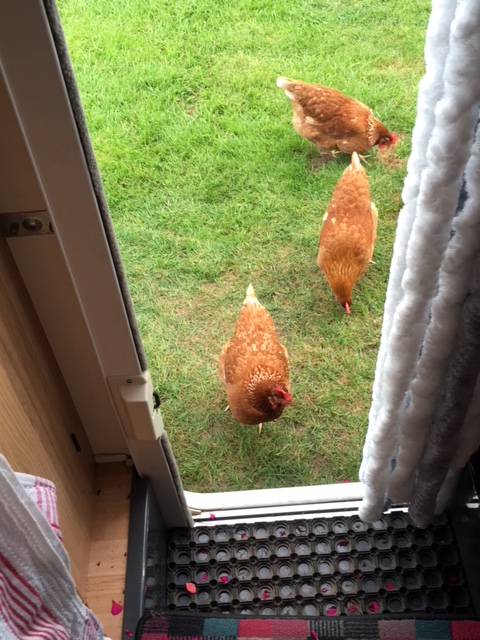
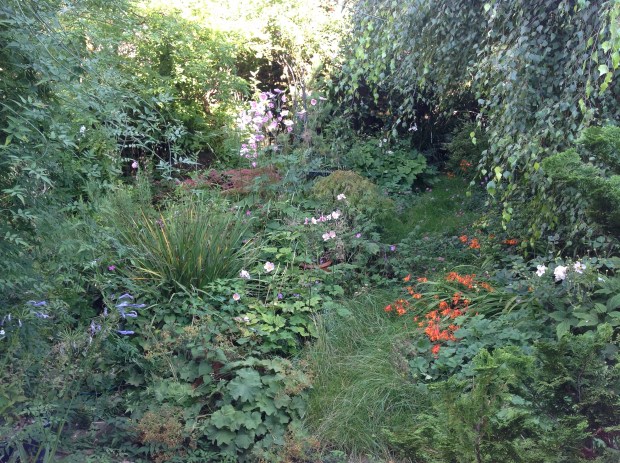
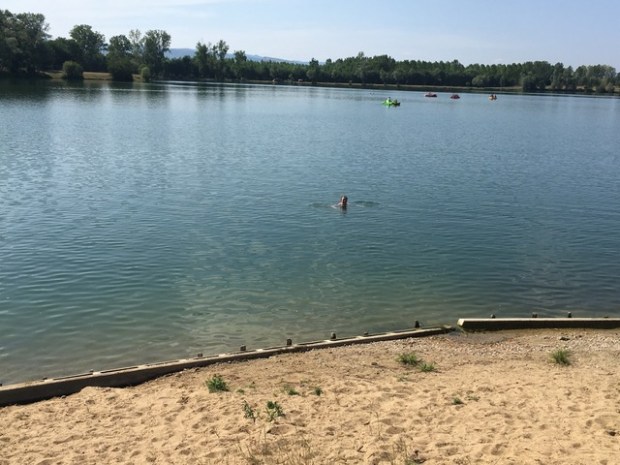
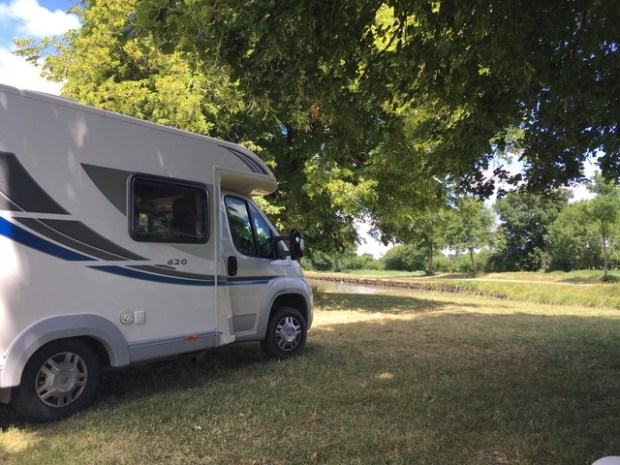


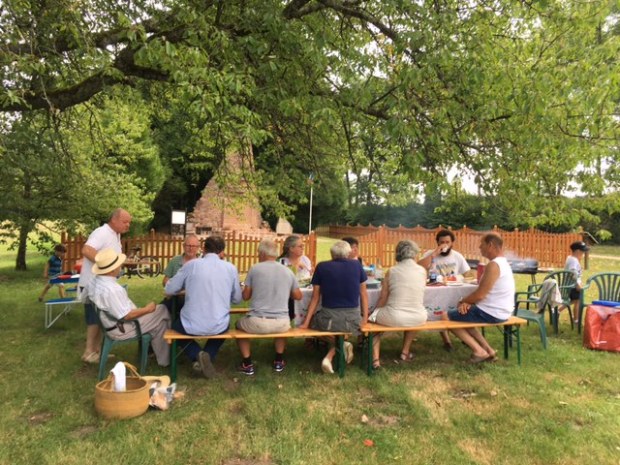
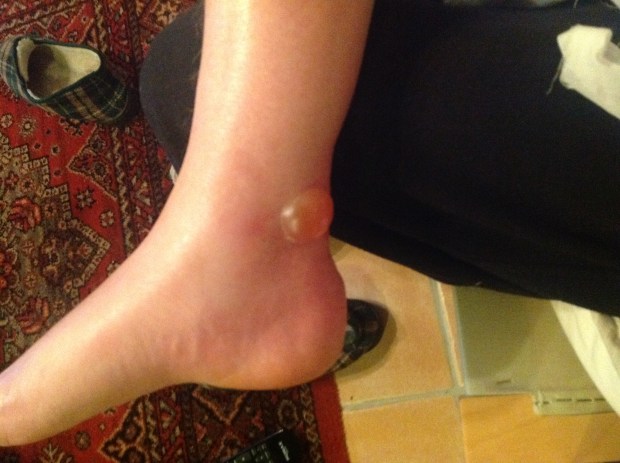


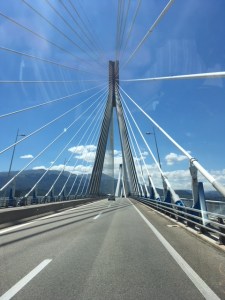 back to the first camp site we stayed at when we arrived a few weeks ago. Next morning we found the right road back to the ferry port by ignoring Stella’s directions to the shorter, narrower, busier minor roads we had followed on arrival.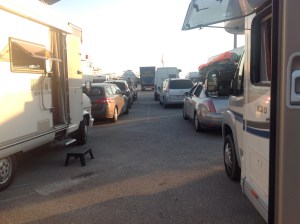
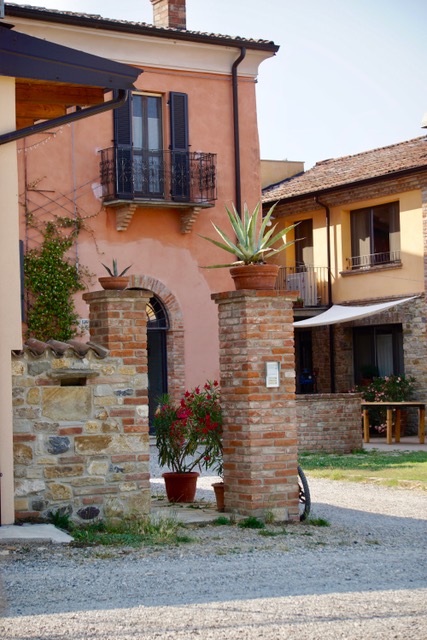 We spent the rest of the sweltering 40 degree evening wilting in the farmyard and watching the sunset over the plain.
 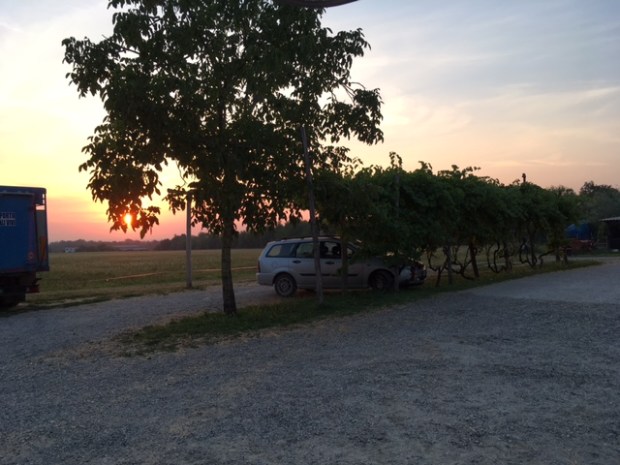 Next time we go to Greece it will definitely be earlier in the year.

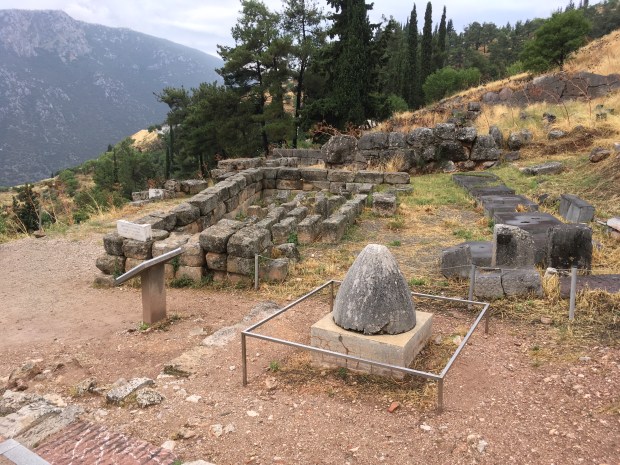 there by Zeus after two eagles had indicated the approximate spot. There seem to be several such omphalosses in existence so there is a chance that this story is not true. It was also the home of the amazingly powerful Oracle of Delphi whose seat over the gaseous vent is now nothing but an unprepossessing pile of rocks. Earthquakes have taken their toll here as in other Greek sites. The whole site is truly magnificent, containing the remarkable amphitheatre (still used)
  the temple and sanctuary of Apollo
 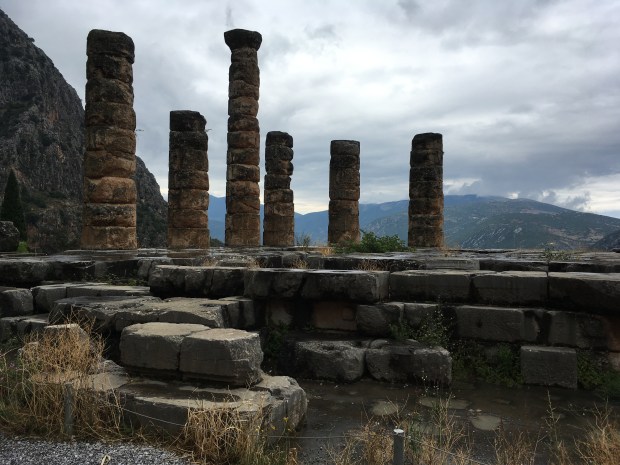 and attendant treasuries from the kings of all regions.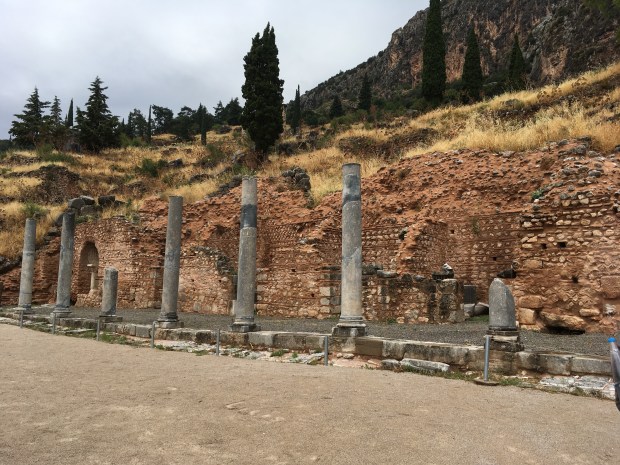
 SnailTrails.. . . .