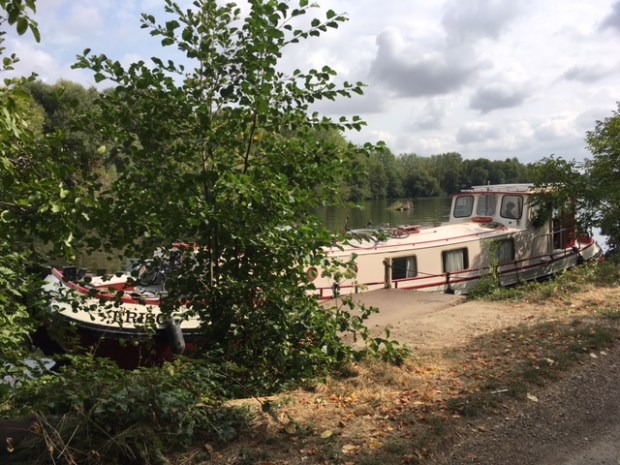
So there we were – tied up alongside a huge working barge, which was itself tethered to an absolutely monstrous working barge, which was waiting beneath the loading gantry of a gravel depot for several million tons of the stuff to come aboard in the morning.

It was the first working day after the Summer holidays the next day and all the working barges would be back ploughing through the waters of the Seine, bearing remorselessly down on the smaller, helplessly drifting craft as they floated powerlessly towards the thundering weir…….. and so on……
There is no AA for barges as far as we knew. And we could not turn the engine on to try and get somewhere for fear of seizing it up completely and did not know where we would take her in any case. I think I can safely say that Jill was fretting a bit at this point. My nerves were shredded. Neil seemed to think it would all be OK in the end. What to do? No easy solutions seemed to present themselves as we considered various sources of information and help. Eventually Neil remembered the card that John and Rosemary, the other tjalk owners, had given Jill a couple of nights ago in case we needed help. How prescient of them! Jill rang. John was solicitude itself and said he would ring a man he knew in Paris who may be able to help.
And that is how we came to be rescued by George. Known as Saint George to all who know him, and especially me. He lived on his boat in Arsenal, the canal basin marina in the middle of Paris, just by the Place de la Bastille, where we had hoped to moor. He offered to take the train to where we were and bring the necessary tools with him to replace the fan belt and check things over as far as he could. Simon Evans had, fortunately, brought two fan belts when he came out to replace it last time, so we had a spare. We had some tools with us but none of the size and weight needed to work on that type of engine.
We were told that the mega barges would not be loaded and ready to go until about 11.00 on Monday so we could have a leisurely night and wait for George to find us. At 08.00 however the bargee hailed us and said he was about to leave to take the children to school. His whole family lived on board it seemed. With casual speed he tried to pass our lines up to the other mega barge but it towered so high above us that we had to dig out more lines and tie them together to reach reach the bollards on its deck. (I used a reef knot in case you are interested and finally realised that learning knots at Brownies many decades ago was actually a useful life skill.)
We waited. The bargee returned and parked his barge as if it were a mini a bit further up the mega barge. We dug out ladders so that when George arrived he would be able to clamber down to us. Jill chatted to the owners of both the barges, who turned out to be brothers who had one inherited barge and one they had bought to expand the family business. Sums of millions of euros were involved. They lived aboard and one of the familys’ mothers looked after the children during term time as their wives also worked on the barges.
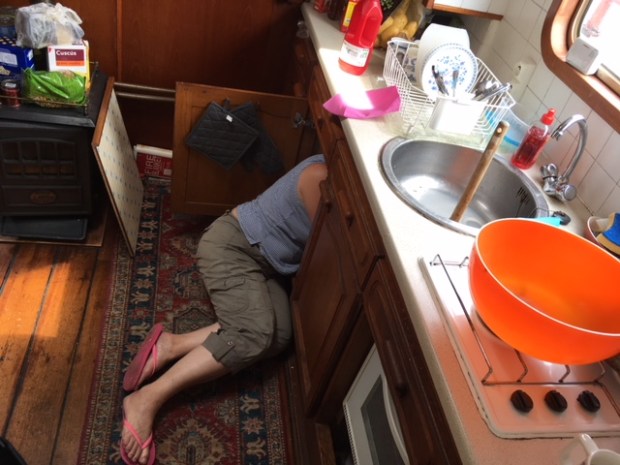
To cut a long story a bit shorter. George arrived – a nicer, more reassuring man you could not meet. He was retired and, very sadly, had lost his wife a year ago so now lived alone in the community of boat-dwellers in Paris. He regularly went out of his way to help sailors in distress and it transpired he already knew Friso. Domestic chaos ensued again while he replaced the shredded fan belt.


He thought there was some misalignment amongst the cogs and wheels that was causing the problem. This was not something he could fix there and then and I was not happy about proceeding all the way to Paris in its current state – not to mention the need for fuel and a fuel filter. There was a marina up ahead where Friso could possibly safely stay, but doing that would make the whole exercise more difficult for Jill – who had to get back to work and still sort the boat out. I voiced my very real fears to Jill while George was still there – I’m not sure if he was planning on sailing back with us but he said he would. I felt guilty at applying the emotional pressure:-( George did want to check the fuel and filter situation before heading into Paris though. His presence restored my nerve enough to not abandon ship!
We sailed away. I was freed of all rope and lock duties by George who stayed at the back with Jill and offered her much very useful instruction on things related to barge handling. Jill now brought Friso to a complete standstill in the locks before ropes were deployed. George chatted knowledgeably to the remote lock keepers on the VHF radio.
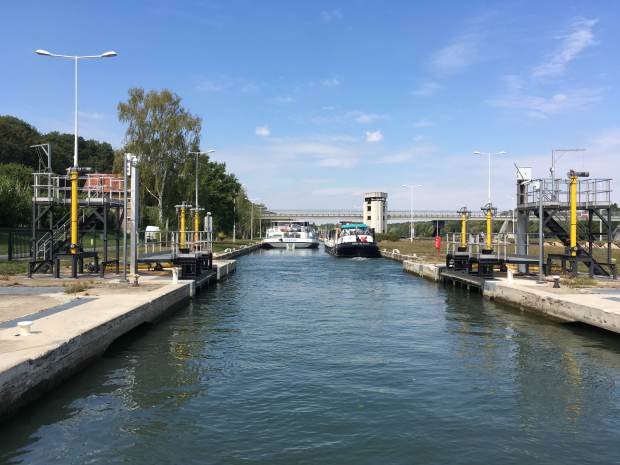 Life became relaxed.
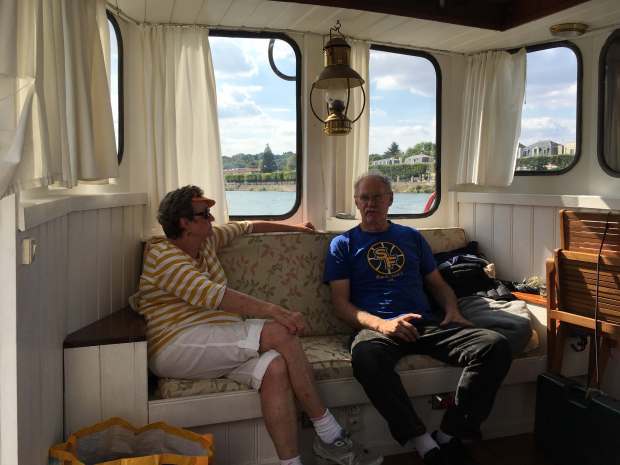
A quick stop at the nearby marina and Neil and George figured out how the fuel gauge worked (it’s a manometer if you are interested in that kind of thing and a button needed pressing and holding), that we actually had plenty of fuel, and that the fuel filter was, in fact, as clean as a whistle.
So – next stop Paris Arsenal. George had phoned ahead to arrange for us to use a temporarily vacant berth – the Arsenal marina is always full to bursting and short stays need careful advance planning. Thanks again George! It was a restful trip down the river – I made tea and chatted to George mostly. The huge barges wove between the other craft and water skiers, swerving away at the last minute – they seemed to be surprisingly manoeuverable as they sped along!
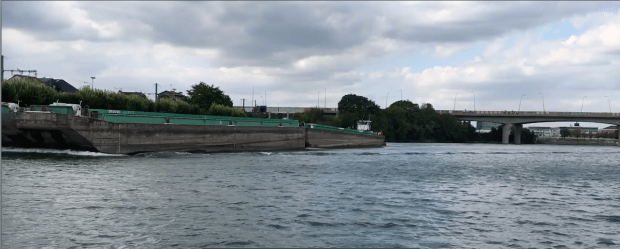
There were signs of last year’s flood damage along the banks of the Seine. And some familiar buildings.It’s not a great picture of the Bibliotheque:-(


Manoeuvering Friso into the very narrow and deep lock entrance cut into in the embankment of the Seine was a challenge for Jill as it meant cutting at right angles across the full force of the river. With George’s advice she edged us in perfectly.

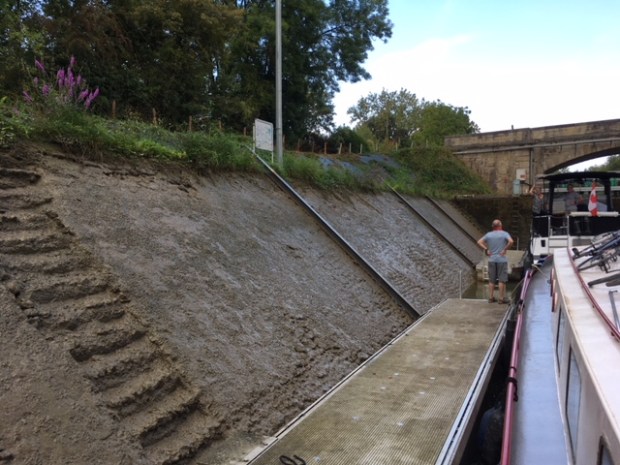
The marina is located where a tributary joins the Seine so it was upstream to to us and we came in three metres below the bank – the water came in with some force! Fortunately the lock had rising bollards so you only had to hook around one on the level and it rose with you – no need to climb any slimy lockside ladders!
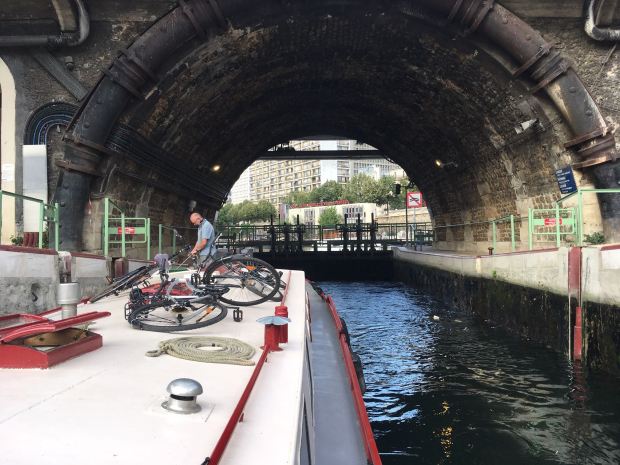
Once inside Jill had a crash course in precision manoeuvering in a very tight space in the crowded basin, handled admirably, and we nosed between two regular Arsenal dwellers without so much as a neighbourly bump.
Phew.
If you were walking through La Place de la Bastille in Paris you would probably not realise that there was a whole neighbourhood of boats twenty feet below, gently nudging the pontoons of the narrow canal basin.
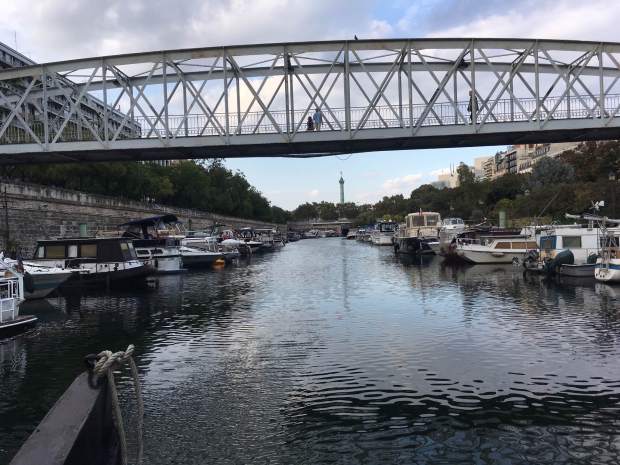
There are families who live there year round. There are winter people who stay through the winter then sail elsewhere for the summer months and let their berths lucratively to summer visitors. Then there are those who are passing through – like us. Climb the stairs and there you are – right in the heart of the city. Magic!
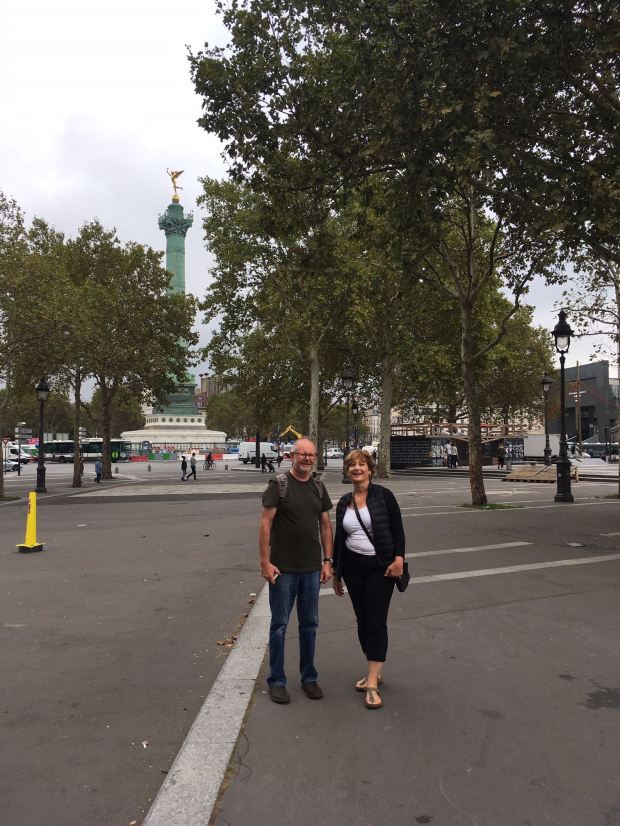
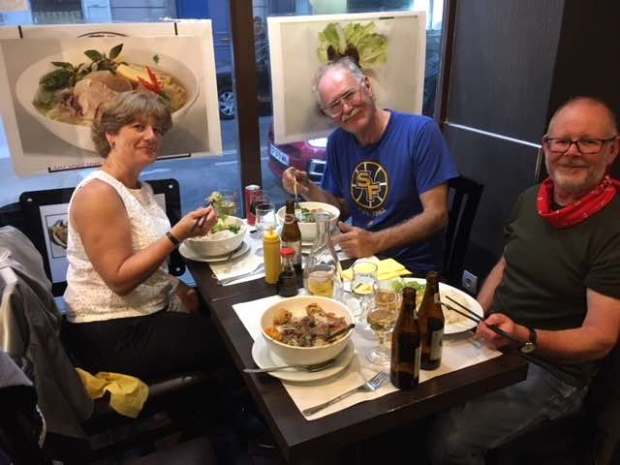
Going out for dinner was the only payment George would countenance and Jill was very happy to treat us all. He took us to his favourite local Vietnamese restaurant where three of us had a Bo Bun Nem – probably the most delicious combination of foods I have ever eaten.
The next morning we climbed the stairs again and went for coffee and croissant in a nearby pavement café. Feel so privileged to be able to do such typical Parisian things.

Jill had to leave in two days and Neil and I could have stayed on since Friso would be there anyway. We needed to get back to Portia in her campsite though – although it was secure, leaving her unattended is always slightly worrying. With just our elegant supermarket bags-for-life as luggage we headed for the fast train back to Migennes, missed it and caught the slow one. Three hours later we were back in the van and then straight into the lifesaving campsite pool – it was still very hot.
It was certainly an adventure. And, in retrospect, very enjoyable!
As a follow-up: a plan had been hatched for Friso’s onward journey. The berth at Arsenal was only available for a few days but George and his friend Bruno could move her around as other boats came and went. This would give them a chance to carry out some necessary fixes and they would then take her down to Rouen – a journey of one or two nights I think. Jill would visit her there and make plans for her to be taken overland to Ireland. This did actually happen over the next couple of months and Jill has said she will write the story of the final, difficult, leg of the journey. Bon courage Jill and go Friso!
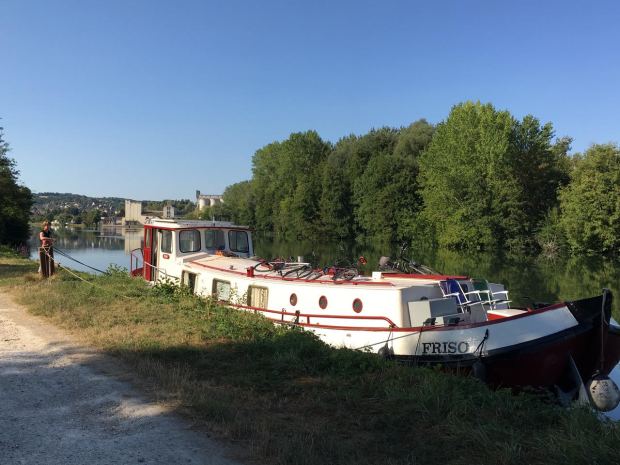


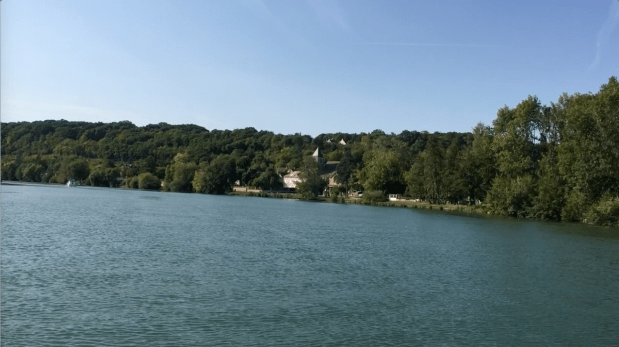 It is much wider and has many fewer locks. People were enjoying the weekend in houses alongside the river and swimming and generally having a good time in the summer heat. Not sure I would be in the water knowing what I now know about all these boats and their effluent!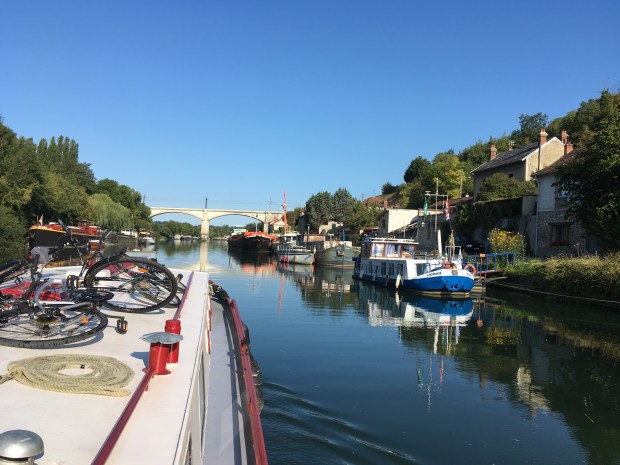
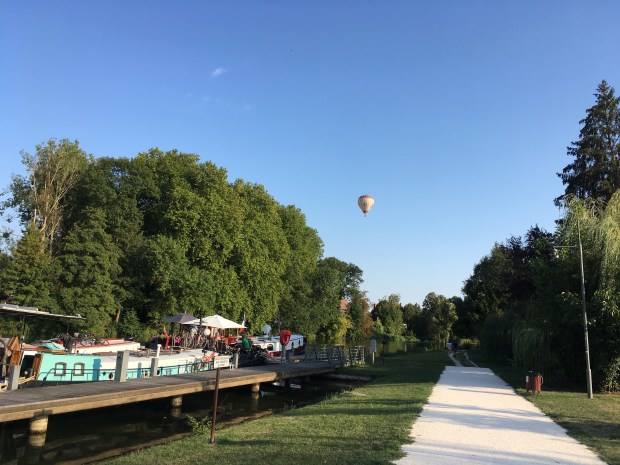


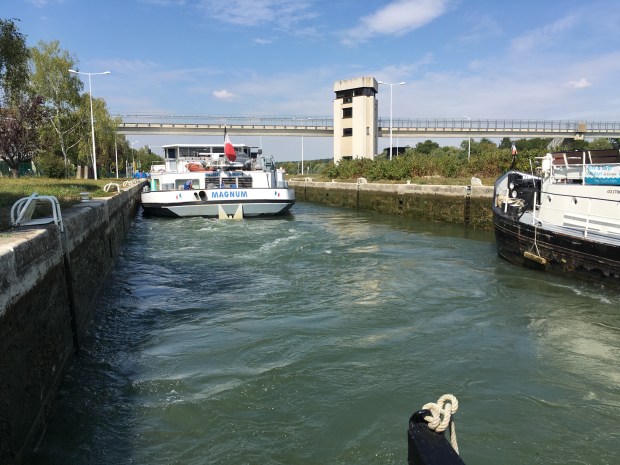

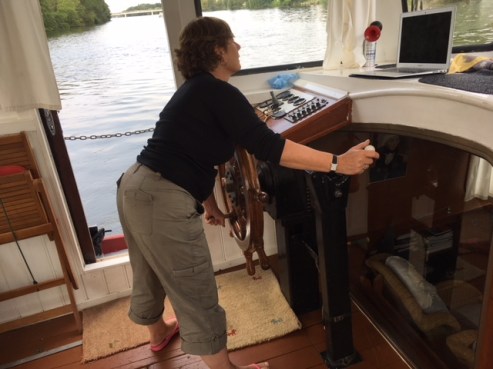
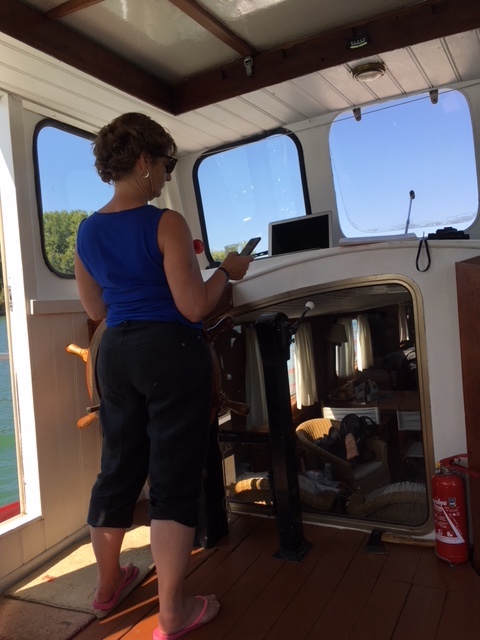
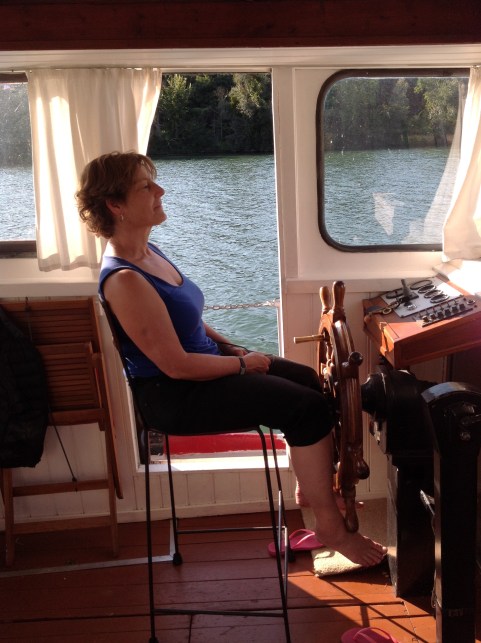


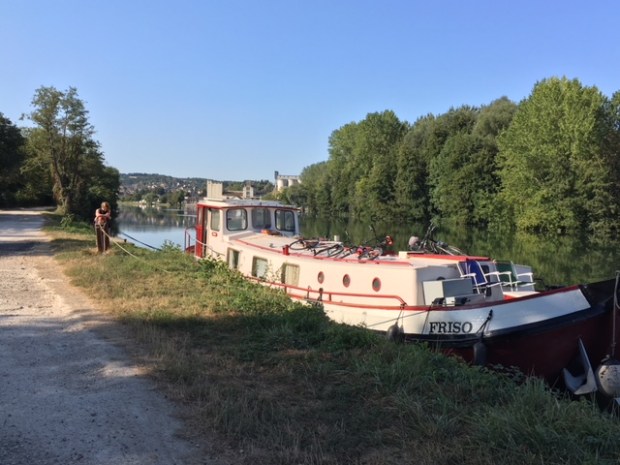
 Remember Friso the tjalk we had looked at two or three weeks ago and that Jill subsequently bought? Well – back at the fermette we get the news that she has mostly passed the survey needing only a few fixes before she can start her journey to Limerick. There needs to be a safety rail fitted all around the back and the oil needs changing amongst other things. Friso has been moved up-river by the surveyor to a boatyard at Migennes on the Yonne – only a couple of hours away from the fermette. We are going as far as Paris and an approximate date for leaving is given as Wednesday 29th. We will take the van up to the handily-placed campsite near the boatyard and help prepare the barge until it’s time to go. Portia will stay in the secured parking of the campsite while we sail up to Paris then get the train back to the, equally handily-placed, station. Things seem to be falling nicely into place.
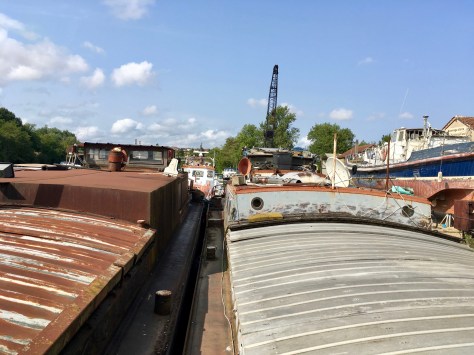 What a place of wonder the boatyard is! Apart from all the boats standing high and dry having their bottoms scraped or repainted, the quay is cheek-by-jowl with rusting hulks awaiting goodness knows what, and ancient craft that Simon Evans collects. Friso is moored three deep alongside two huge rusting barges that have to be climbed across to gain access. Worth remembering not to push too hard with your feet on the deck of one boat while heaving yourself up onto another – the gap widens as you struggle:-(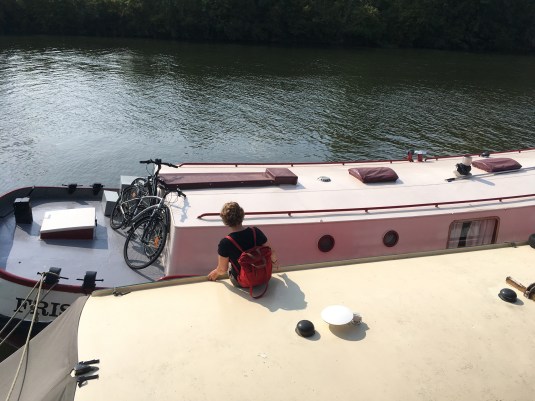




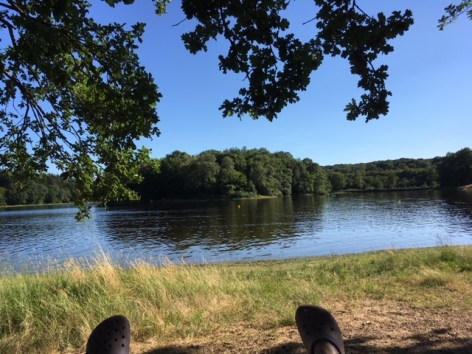
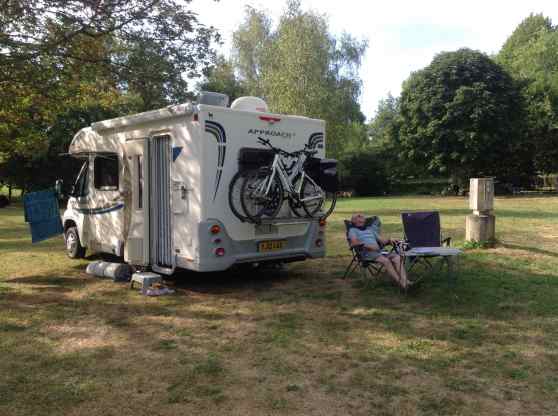
 Municipal sites are great – they tend to be nicely located and pretty cheap and a flick through the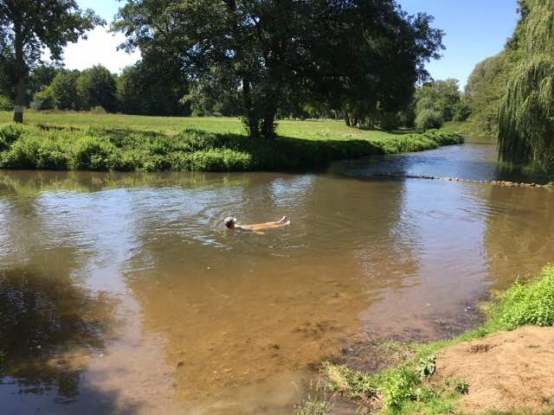



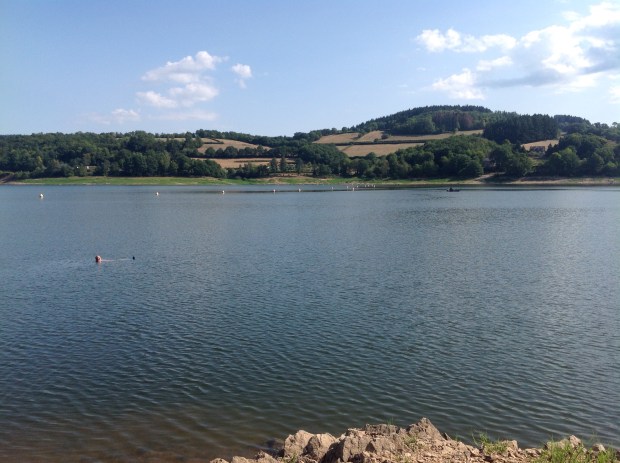
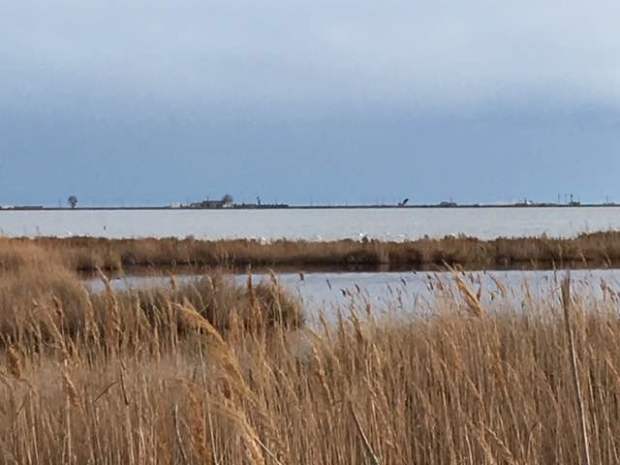
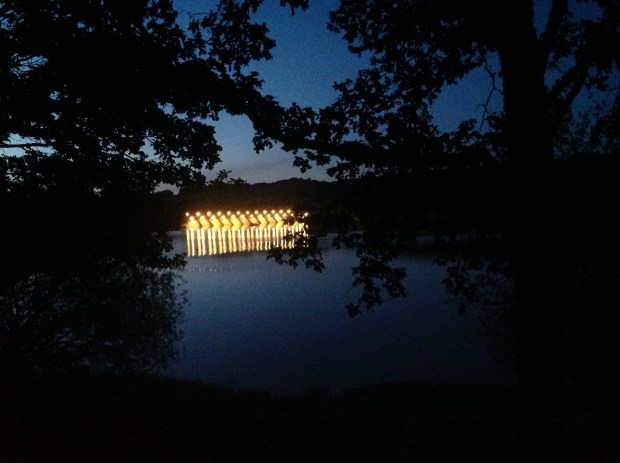 (It’s the barrage at the end of the reservoir.)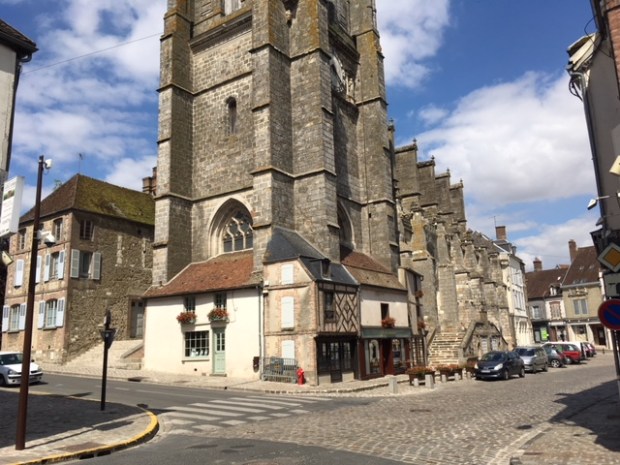

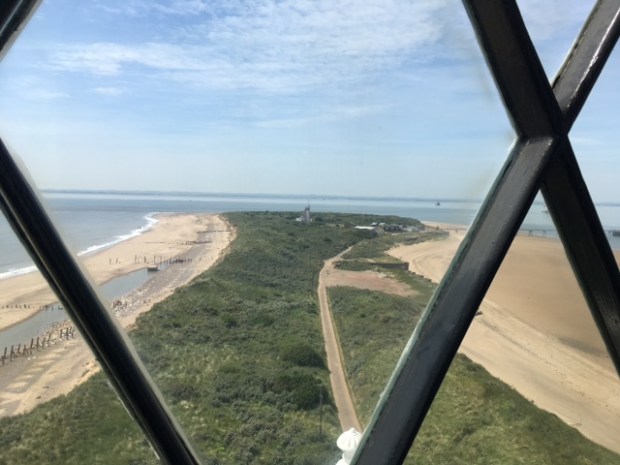
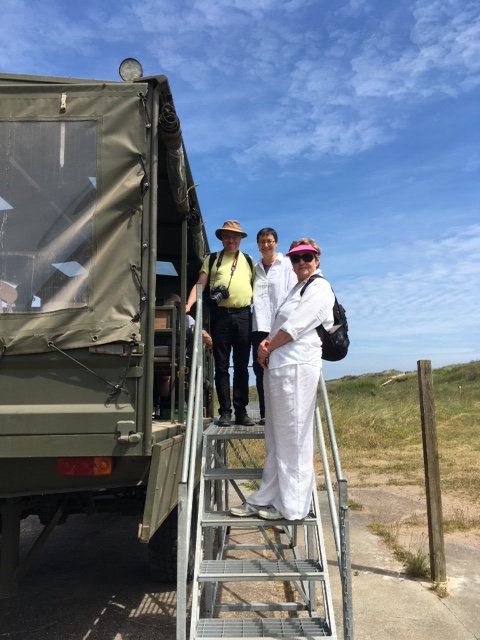
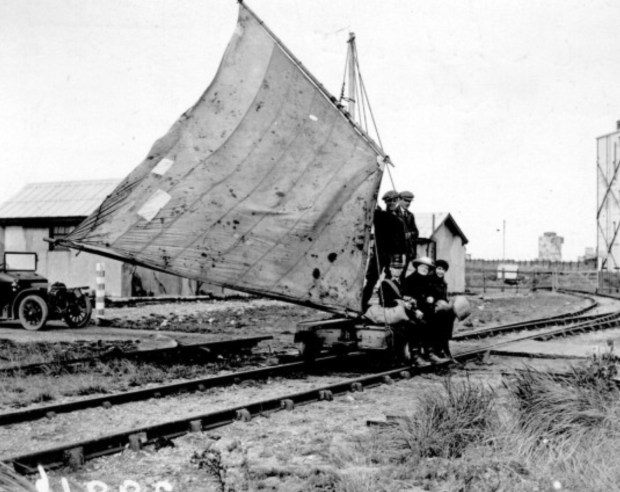
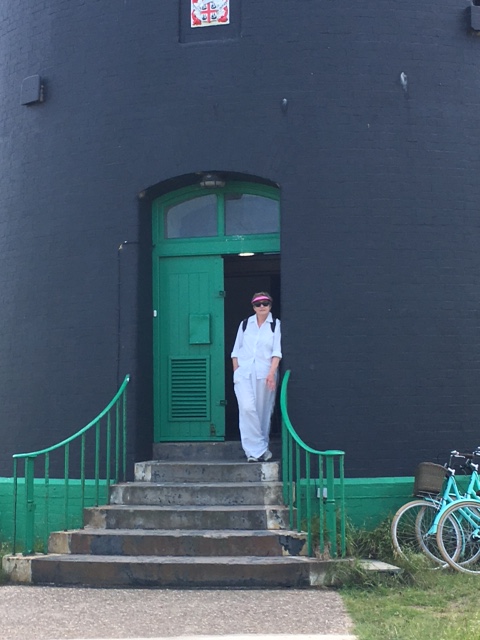




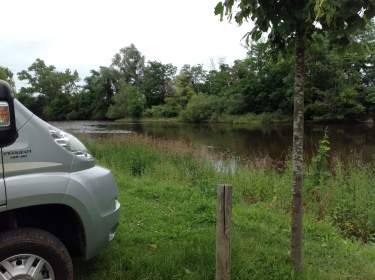 Not so full at this time of year but several other vans roll up as the afternoon turns to evening. This aire has the most off-putting service point where the clean water hose hangs inside a rather smelly coin-operated locker which also houses the black water drain. True, there is a separate cassette-cleaning hose but the proximity of the one to the other and the smell – forget it!


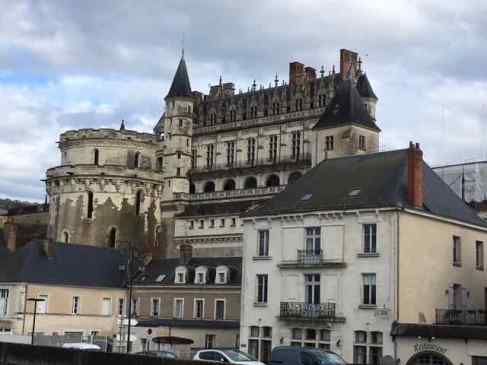
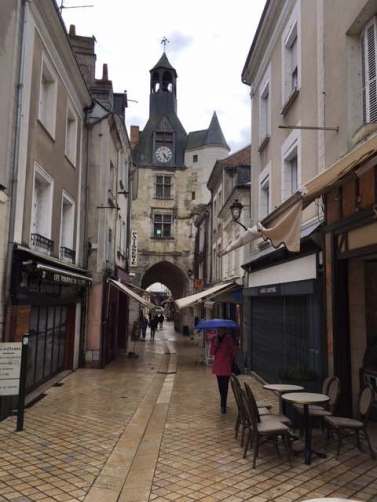 Then we move onto the Normandy coast at a barely-open campsite which promises a heated, covered swimming pool from the first of April. They lied of course. And the wifi did not work either. And the woman on reception was decidedly on the grumpy side – probably fed up with all the complaints! Did not stop them charging full price though. Boo. The walk down to the beach was nice though.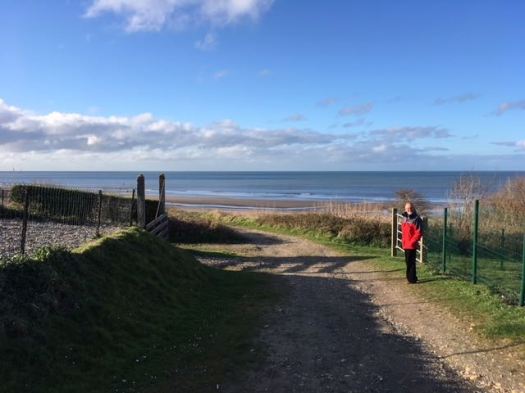
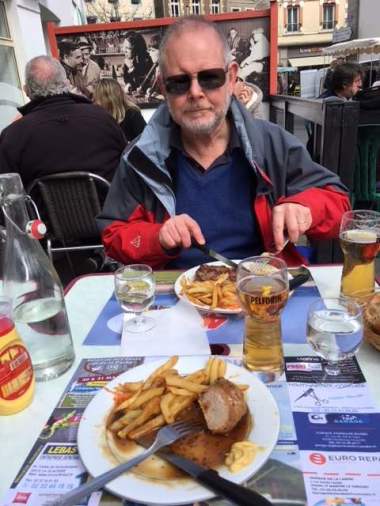


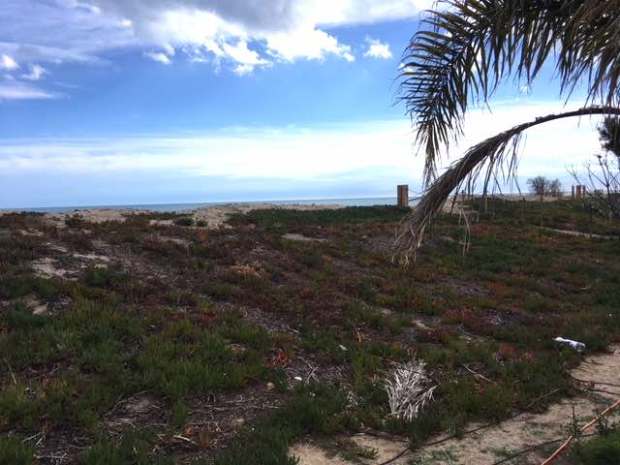
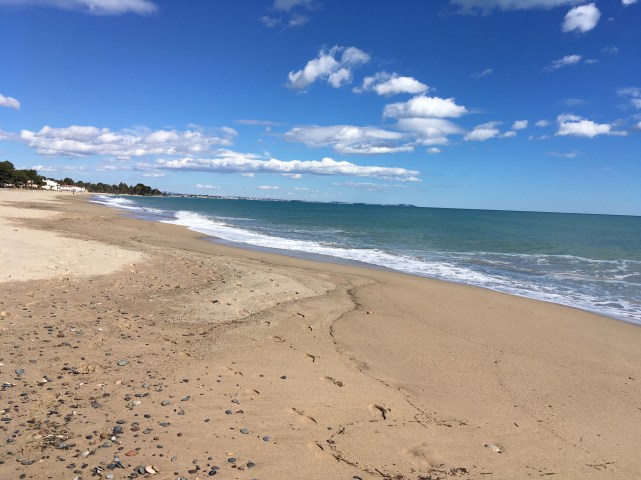


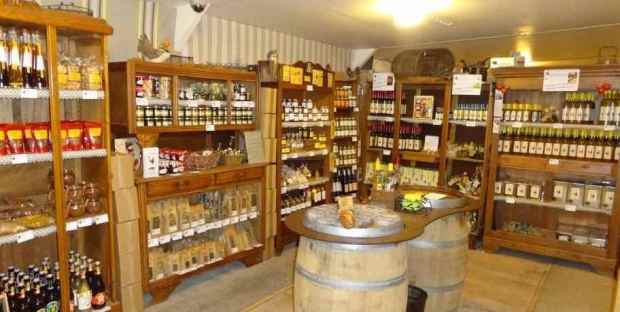
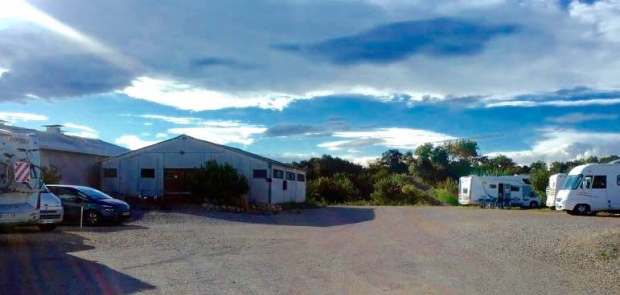 It is equipped with many trestle tables and chairs and a dart board, with blunt darts, hangs tiredly on the wall next to a mammoth scale paella pan. At one end is a tattyish kitchen area with microwave ovens, much appreciated by me, and various other handy facilitites – such as a sink with hot water, much appreciated by Neil. Everything works. There is a free shower and toilet in another building close to some washing machines. This place is wonderful.
 We also buy a sticky-back plastic donkey to start our collection of animal silhouettes on the back of the van. We neglected to get a cockerel in Portugal, or a bull in Spain this time round. Some intrepid people even have a camel! I wonder if there is a country that has a snail as an emblematic critter?


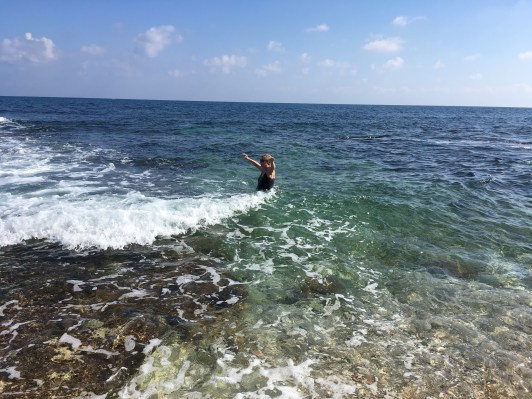 Otherwise we spend a lot of time on the beach searching for sea glass – my collection is growing well and one day I really will make some jewellery out of it. Two different friends have pretty examples so I know it can be done.


 The campsite wifi is rather hit and miss, the explanation being that Montgo, the modest mountain that towers a bit to the south of us, necessitates a big satellite dish and this gets knocked out of alignment by the winds that swirl around the tops. Feeble excuse. We also discovered that our Virgin phone packages worked well and allowed tethering! Great news – we have been largely wasting our monthly data allowances up to now. You can even use a lightning cable to link the phone to the TV and stream live UK TV if you want! Amazing.
 where custom dictated one should foregather at 18:00 hours and drink a convivial glass or two before the wind whipping through the cracks in the plastic walls defeated the patio heaters’ attempts to keep it warm. The nights were decidedly chilly! The picture is poor quality but shows what I mean. It was a little bit cliqueish. Those who had been there three months reluctant to yield space to us newbies who had to squeeze around the edges. This improved when several of the clique left for the UK and we expanded our clique with the welcome arrival of Louisa and the presence of a couple from the posh flats on the beach path. At the end of several days we were incorporated into the depleted long-stay clique anyway.
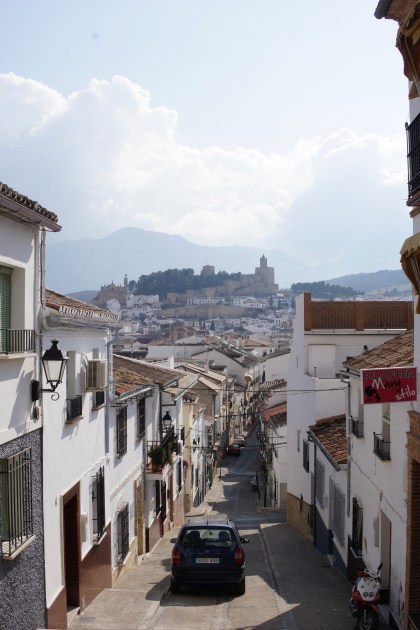 Why did we not get our e-bikes out for that distance in this heat? Not sure – we certainly should have – but, joy of small joys, there was a little tourist tuftuf that did a circuit of the town and you could jump off at the far end to look at the dolmens.
 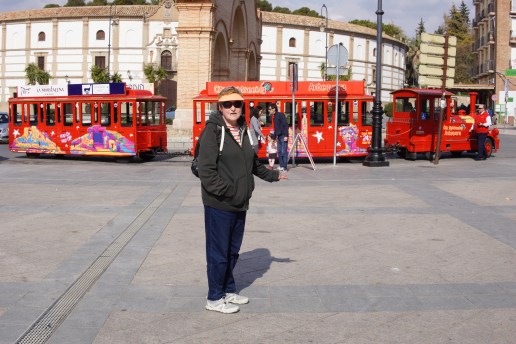 Disappointment followed joy as the tuftuf driver explained the dolmens were shut on Sunday afternoons:-( Not to worry I said, what time do you start in the morning? They are shut on Mondays as well it seems:-((( How do you shut a bronze age burial barrow-cum-dolmen in a field? We decided to walk over anyway to see what we could see.
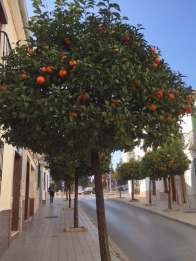 , many lined with satsuma trees covered in bright ripe fruit. Many were lying on the ground – why did no-one harvest them we wondered? When no-one was looking I picked a low hanging fruit and shuffled around a corner to taste it. Wow – what a mistake! So sour and sharp it was like an electric shock. Spitting in the street is so inelegant:-( So now we know why the enticing fruit just hang there and fall unwanted to the ground. A pity they did not plant edible varieties. This is the tree that nearly killed my taste buds.
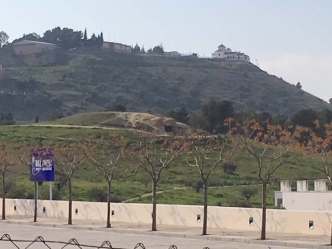 It was hot by now and there was a long downhill drag to the dolmens. We plodded optimistically on and reached the seriously unfriendly fence surrounding this UNESCO Heritage site of mounds and stones. The panels were so arranged that you could not get a good look at the monuments until you were quite far away. My photo shows this. The photos below show what we could have seen thanks to an anonymous camera person who was lucky enough to be there on an open day and kind enough to post them on the internet. Definitely not what I had expected and definitely one to go back to. Mid-week to be on the safe side!


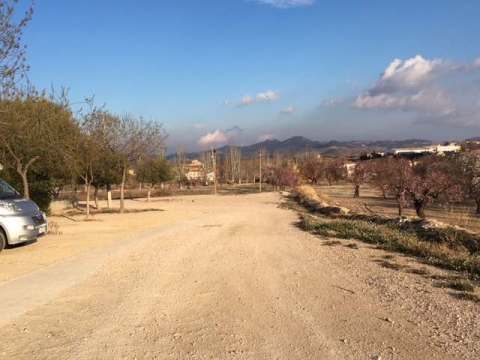 It’s now 20th February and we were pretty much just focussed on getting to the Med. We could have done it from Velez-Rubio but the campsite near Denia was booked for 21st so another night in a free aire was called for. There is one in Castalla that, like many others, is sited next to the town sports complex. This one was great as it had a few electric sockets in the periphery wall – free if you were sneaky because there was no-one around – or €3 if you waited until the gym and pool opened later on. Being good little motorhomers we went and paid. Our reward was to be offered free showers in the changing rooms if we wanted! With all this sun the solar panels keep us all charged up but having the electricity saves gas on water heating and lets us use the microwave to easily heat up lasagne, for example. It can be a slow and messy job in a pan! We gave up using the oven some time ago considering it a bit wasteful, but it makes a handy extra cupboard.
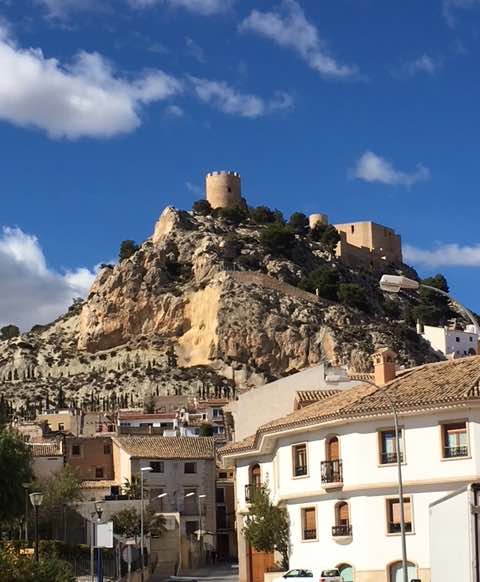 It was hot. We would make a start and allow ourselves to give up if necessary. As it happens we kept going right to the top!
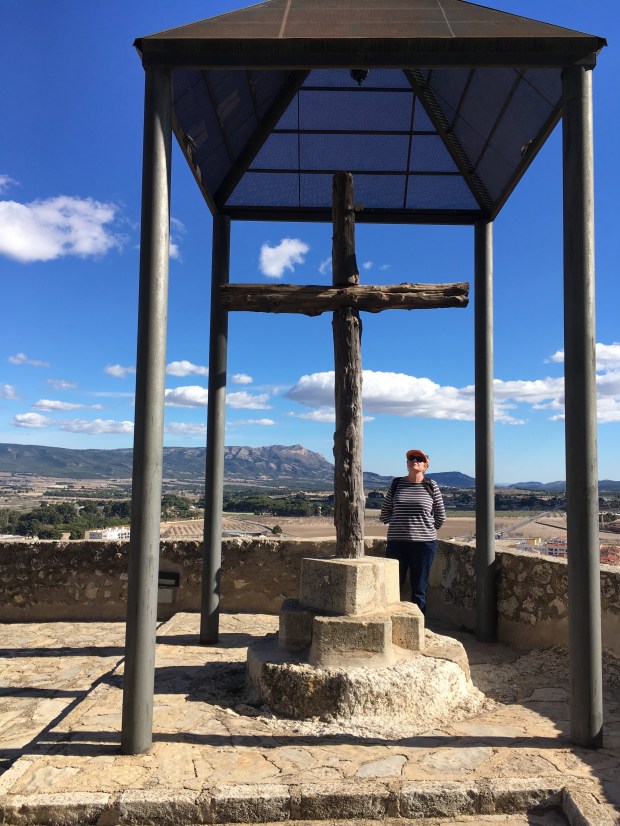
 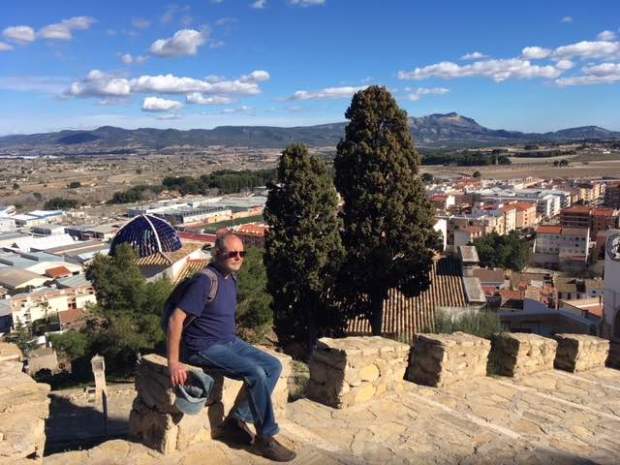 On one pinnacle was a burnt cross with a view.
 There were water tanks cunningly cut into the rockface fed by other channels cut into the rock to gather rainwater in time of seige. Or maybe just to save trekking up and down to town every day for a wash.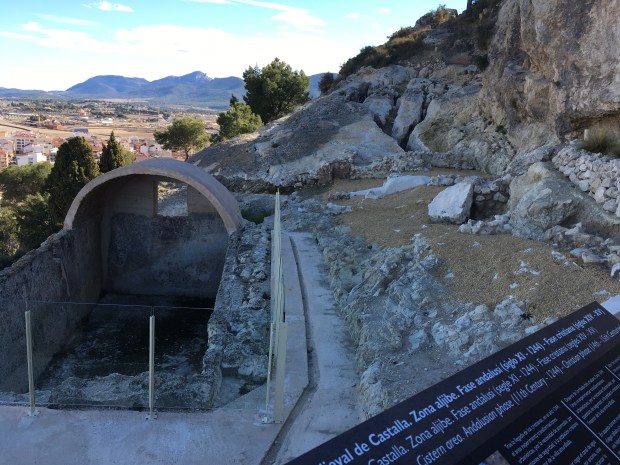
 SnailTrails.. . . .